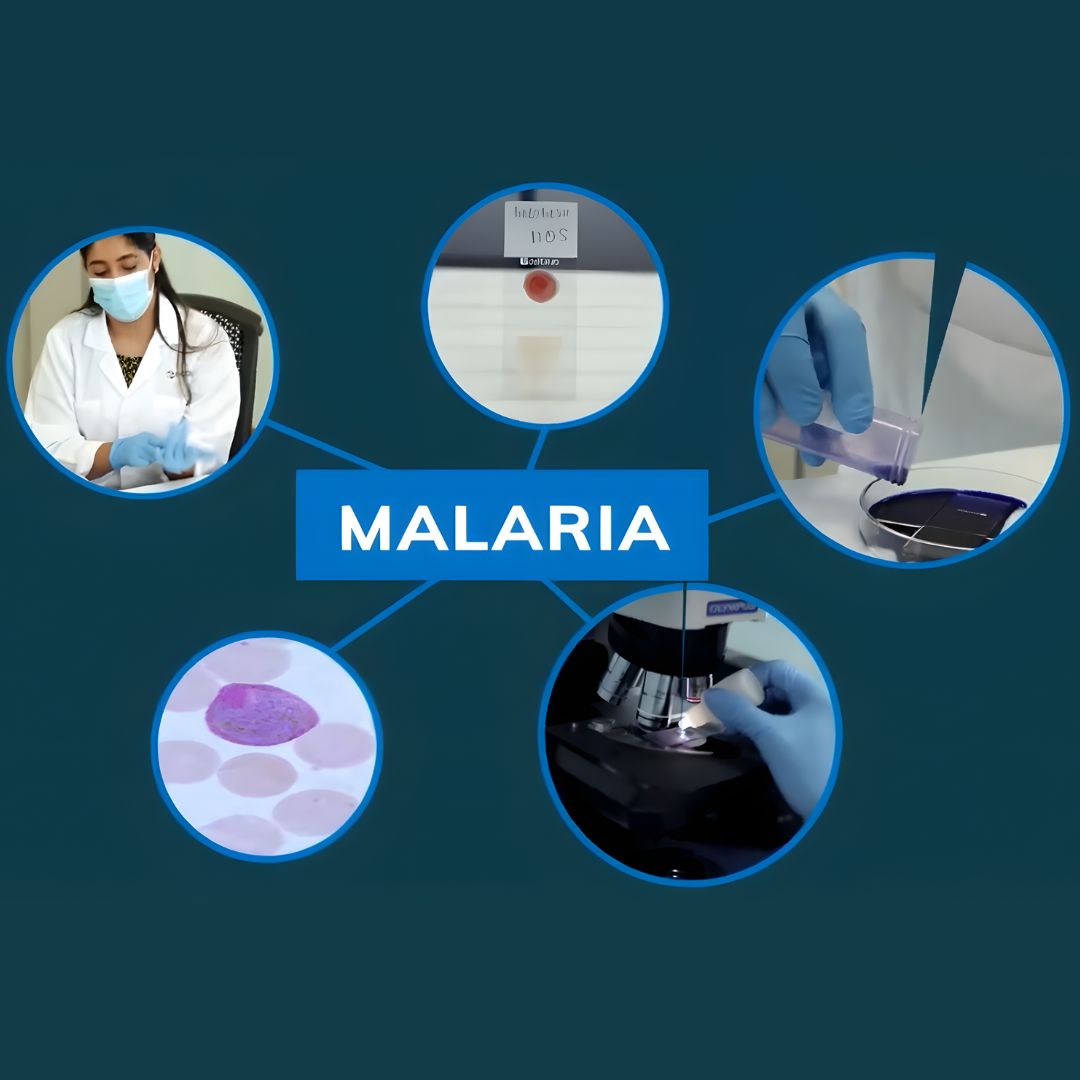
Course description
The course is divided into four thematic modules:
1. General information.
2. Laboratory diagnosis.
3. Plasmodium species identification and parasite counting.
4. Microscopy quality assurance.
General aim of the course
To update and review the basic concepts of epidemiology and laboratory diagnosis of malaria, as well as the corresponding quality controls.
Learning objectives
At the end of the course, participants will be able to:
- Recognize malaria as an important public health event.
- Review general aspects of the infectious agent, life cycle and clinical manifestations.
- Identify the actors that are part of the epidemiological surveillance system in the country.
- Become familiar with the most widely used diagnostic tools available at national and global levels.
- Identify microscopic diagnosis of malaria using thick blood smear as the gold standard technique.
- Know the steps for preparing and staining thick blood smears and blood smears with quality parameters.
- Understand the basis of microscopic diagnosis.
- Differentiate between the different species of Plasmodium sp.
- Know the steps to perform a parasite count.
- Know the activities that are carried out as part of the quality assurance of the microscopic diagnosis of malaria.
- Understand the importance of the participation of laboratories in the process for the quality assurance of the microscopic diagnosis of malaria.
Methodology
The course is completely self-learning, participants are responsible for their learning process independently. In this way they can decide the pace of progress and the time they will dedicate to each content.
After each module, a theoretical evaluation will be applied, covering the most relevant aspects of each one.
Progression through the modules will be subject to this evaluation.
Hours
10 hrs
Asessment and certification
Participants who meet all course requirements and pass their evaluations will receive the corresponding certificate of participation and approval granted by PAHO.