Introduction
Nursing and Midwifery personnel represent the majority of the health workforce in the Region of the Americas. These professionals play a key role in health systems services, health promotion, disease prevention, health management, and education. Given the role that nurses play in health services and health systems, investing in nursing and midwifery education is fundamental to achieve a sustainable workforce and to provide safe and quality care.
The Caribbean subregion is experiencing a critical shortage of nurses and midwives, with low retention and high turnover rates. In this sense, faculty training and teaching skills will assure more equitable access to care, more preparation in emergencies, and improved health outcomes. Developing the capacity of nursing and midwifery faculty in the Region is critical to achieving universal health and sustainable development goals.
Enhance workforce capacity-building is one of the strategic lines of the Pan American Health Organization (PAHO) Policy on the Health Workforce 2030: strengthening human resources for health to achieve resilient health systems. In addition, nursing education is one of the priorities of WHO Global strategic directions for nursing and midwifery 2021-2025, endorsed by the World Health Assembly.
Actions aimed at health personnel education and training, among other aspects, should consider innovative learning methods and the use of information and communication technologies. It is worth mentioning that the pandemic of COVID-19 has demonstrated the need to optimize the use of technologies, with the implementation of remote and hybrid teaching strategies. Faculty trained in the appropriate use of virtual teaching tools will strengthen the ability to adequately qualify future professionals, aiming to expand the availability of qualified nurses and midwives and their contributions to health systems.
Investment in nursing and midwifery education has the potential to generate new knowledge, guide practice based on the best evidence, and develop policies to achieve better health outcomes. This course supports PAHO's technical cooperation actions on Strengthening Nursing Education in the Caribbean.
Course objective
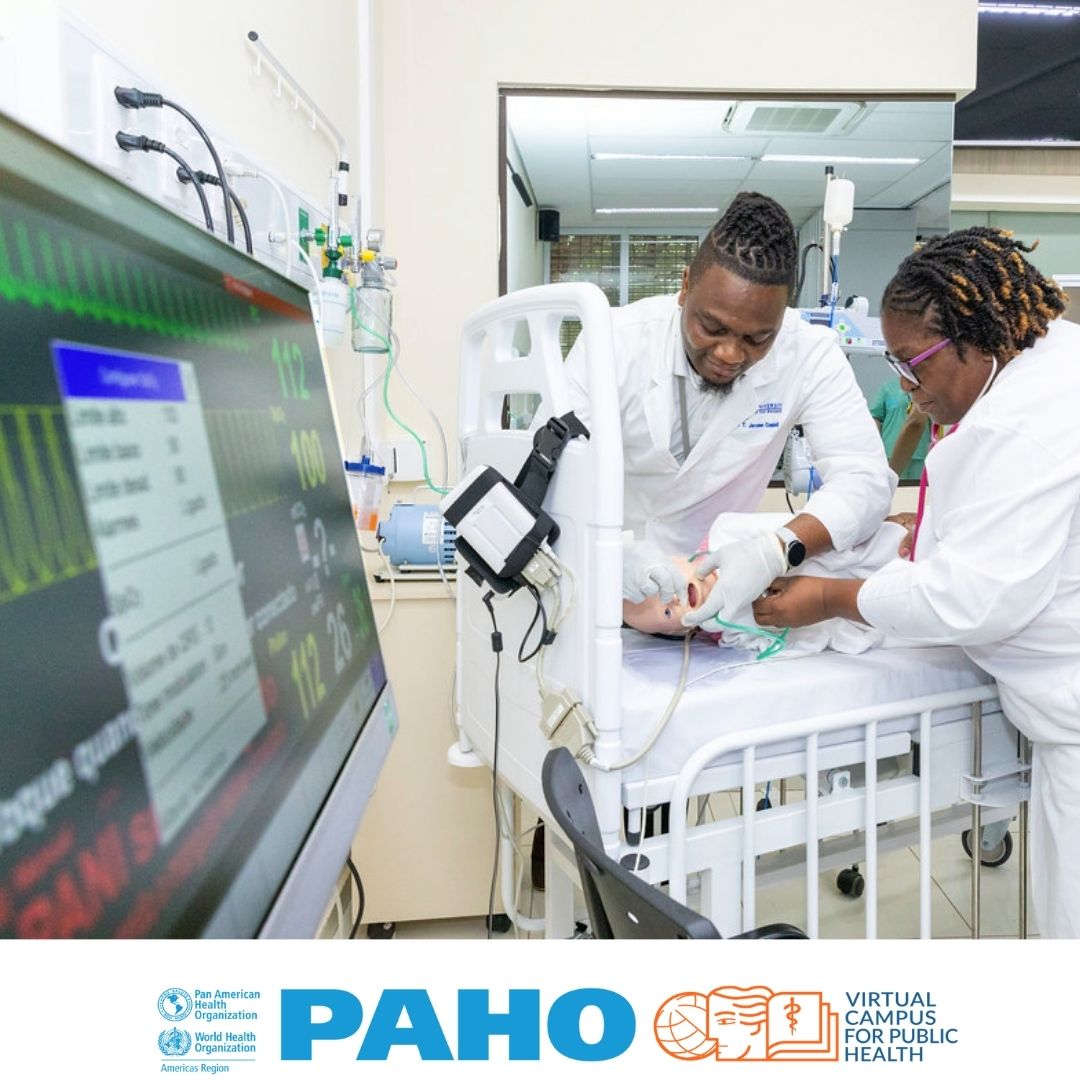
This course seeks to build capacity in Caribbean nurse educators with training in hybrid and online instruction, with specific focus on clinical placements and simulated practice settings. Furthermore, it intends to enhance the quality of nursing education in the Region, with the goal of the achievement of access and adequate health coverage for the population.
Learning objectives
At the end of the course, participants will be able to
-
Evaluate the concepts of hybrid teaching and simulated practices in nursing and midwifery education.
-
Create and implement simulated practice scenarios.
-
Design and implement hybrid teaching.
-
Apply best practices in assessment and evaluation in hybrid teaching and simulation.
Target audience
The course is aimed at nursing and midwifery faculty, tutors and educators from Caribbean countries.
Duration/workload
The duration of the course is five weeks (from September 1st to October 5th) and is conducted on PAHO´s Virtual Campus for Public Health (VCPH). Participants are expected to dedicate a time commitment of approximately 6 hours per week to coursework. The course comprises interactive activities facilitated by the course tutor, including participation in discussion forums, short individual assignments, readings, quizzes, guides, and tools. Synchronous virtual sessions will be held, facilitated by expert lecturers.
Participants in this course must previously complete the introductory self-learning course ‘Integrating Simulation and Technology in Nursing and Midwifery Education’, available in VCPH (link will be provided opportunely).
Course structure
Module - Period - Synchronous class
1: Hybrid Teaching: Improving Digital Competence in nursing and midwifery educators - September 1 - 7 - September 2 – 10:00 am - 12:00 pm (ET)
2: Designing and Implementing Simulated Practice Scenarios - September 8 - 14 - September 9 - 10:00 am - 12:00 pm (ET)
3: Course Design and Delivery for hybrid teaching - September 15 - 21 - September 16 – 10:00 am - 12:00 pm (ET)
4: Assessment and feedback for hybrid teaching and simulation competencies - September 22 - 28 - September 23 – 10:00 am - 12:00 pm (ET)
Final assignment - September 29 – October 5
This course is available only to previously selected participants. We invite you to explore the free and open self-learning courses offered by the Campus.