
Sensibilización en Educación Interprofesional en Salud para Docentes - Edición 2026
Introducción:
Este curso está diseñado para sensibilizar e inspirar a los docentes y encargados de la coordinación académica de programas de formación profesional en ciencias de la salud sobre la relevancia de la Educación Interprofesional (EIP) y la Práctica Colaborativa (PC). Combina la flexibilidad del autoaprendizaje a distancia con la riqueza de la interacción sincrónica a través del acompañamiento tutorial enfocado en la reflexión y análisis, preparando a los participantes para una profundización en el tema. Al finalizar se emitirá un certificado de participación para quienes completen los requisitos del curso.
Este curso busca despertar el interés de docentes de ciencias de la salud en la EIP y la PC. El objetivo es que los participantes comprendan por qué es importante integrar estos conceptos en la formación profesional para mejorar la calidad de la atención en salud.
A lo largo del curso, se identificarán los conceptos clave de la EIP, sus beneficios para estudiantes, y docentes, y aprenderán a diseñar propuestas relacionadas con EIP para implementar en sus programas de formación. La metodología es híbrida, combinando webinarios sincrónicos, con actividades asincrónicas como foros de debate y análisis de casos con acompañamiento tutorial. Al finalizar, las personas que completen los requisitos recibirán un certificado de participación emitido por el Campus Virtual de Salud Pública (CVSP) de la Organización Panamericana de la Salud (OPS).
Propósito y Público Objetivo
Propósito General:
Despertar el interés en la EIP y la PC en los docentes y autoridades académicas, motivándolos a reflexionar sobre la importancia de su inclusión en las propuestas formativas de grado, posgrado y educación continua.
Público Objetivo:
Docentes activos de cualquier disciplina en ciencias de la salud, por ejemplo medicina, enfermería y partería, odontología, farmacia y psicología, entre otras, que trabajen en instituciones académicas o de servicios de salud formando profesionales.
Resultados de Aprendizaje
Al finalizar este curso, los participantes serán capaces de:
- Identificar los conceptos fundamentales de la EIP y la PC.
- Fundamentar la importancia de la colaboración interprofesional para mejorar la calidad y seguridad de la atención en salud.
- Reconocer los principales beneficios de la EIP y la PC para los estudiantes, los docentes, los usuarios y el sistema de salud.
- Identificar situaciones cotidianas en su práctica docente o clínica donde la EIP podría generar un impacto positivo.
- Desarrollar propuestas iniciales de EIP para su institución.
Carga Horaria
El curso tendrá una duración total de 5 semanas, incluyendo webinarios sincrónicos y actividades asincrónicas con acompañamiento tutorial. La dedicación estimada total es de 40 horas, distribuidos en 4 módulos (semanales) de 8 horas, además incluye una semana de sensibilización para el uso de la plataforma.
Estructura del Curso
- Módulo 1: ¿Por qué necesitamos la Educación Interprofesional?
- Módulo 2: ¿Qué es la Educación Interprofesional?
- Módulo 3: Los beneficios de la EIP
- Módulo 4: De la teoría a la práctica
Metodología de Enseñanza-Aprendizaje
- Webinarios Sincrónicos: Utilizados para el lanzamiento y cierre del curso, generando interacción entre los participantes y resolviendo dudas en vivo.
- Aprendizaje Asincrónico: El contenido se divide en pequeñas unidades (videos, lecturas, infografías) para facilitar el autoaprendizaje.
- Aprendizaje basado en la reflexión y el diálogo: Los foros de discusión son el núcleo de la fase asincrónica, donde los participantes intercambian ideas y reflexionan sobre sus experiencias, guiados por los tutores.
- Actividades de aplicación ligera: Ejercicios prácticos que conectan la teoría con la práctica sin exigir productos complejos.
- Tutorización focalizada: El tutor actúa como moderador y facilitador, ofreciendo guía general y retroalimentación concisa y motivadora.
Este curso está disponible solamente a participantes previamente seleccionados. Le invitamos a explorar los cursos de autoaprendizaje libres y gratuitos del Campus.
Alcohol Use, Women’s Health and Pregnancy: Comprehensive Approaches to Preventing Problems Associated with Prenatal Alcohol Exposure
General purpose
The purpose of this self-learning course is to provide up-to-date training and information to health care providers to address alcohol use by women of reproductive age and pregnant women, by introducing strategies for health promotion, early detection and motivation for change in this specific population group.
Guidelines
One of the most important and updated reference materials for this self-learning course is the World Health Organization (WHO) guide "Guidelines for the identification and management of substance use and substance use in pregnancy". Published in 2014, these guidelines were developed by an extensive working group involving experts from various institutions and countries, who conducted systematic literature reviews to identify the most relevant evidence currently available on the subject. Click on the following link to download the document: https://iris.who.int/handle/10665/107130
Summary
The online course "Alcohol Use, Women's Health and Pregnancy: Comprehensive Approaches to Preventing Problems Associated with Prenatal Alcohol Exposure", is an initiative of the Pan American Health Organization. In seven modules and final evaluation, this free self-learning tool primarily aims to equip health professionals to address alcohol use among women of reproductive age and those who are pregnant women by touching on strategies for early detection, motivation for change and health promotion in this target group. The theme areas covered in the course include:
- Background on alcohol use and women's health
- Background on alcohol use and health of the pregnant woman
- Implications of alcohol use in gestation for the fetus and child
- Problems related to alcohol and family relationships
- Identification of alcohol use during pregnancy
- Brief interventions and treatment
- Implementation and health promotion
Target audience
The target audience of the course are health professionals such as nurses, psychologists, doctors, community health agents, among others, who work in primary health care, maternal and child health, or mental health, and all those who attend women of childbearing age.
Number of hours that the course certifies
An estimated 8 hours is necessary to complete the course.
Estimation of Alcohol Per Capita Consumption in the Americas
Introduction
The annual per capita consumption of alcohol (APC) is the most accurate and reliable indicator used for monitoring trends in alcohol consumption, harms and policy implementation at national and subnational levels. It is one of the indicators of the SDG 2030 agenda (3.5.2). Despite the existence of data at country level to calculate this indicator, most countries do not know how to obtain the data and calculate the indicator so they can use for public health surveillance in the alcohol field.
Purpose
This course provides detailed information on the data sources needed to calculate this indicator annually, how to calculate it based on tool developed by the PAHO/WHO Collaborating Center in Toronto (Center for Addiction and Mental Health) and used by WHO for its global reports on alcohol and health.
Learning Outcomes
- Become familiar with the data sources required to calculate APC
- Become familiar with the APC tool to calculate the indicator
- Understand the need and value of the APC
- Be able to collate national data and use the tool to report on SDG target indicator
3.5.2 and use the annual APC for alcohol policy monitoring
Participants profile
Anyone interested in the subject. Public health professionals, researchers, students, statisticians, and epidemiologists working with alcohol related information.
Duration
10 hours
Methodology
This course has a self-management methodology, you can do it at your own pace. The exercises are self-reflection and will serve to self-regulate your own learning and identify those elements or units that you should review again.The course consists of audio presentations, two examples based on national data and automated quizzes in order to apply the acquired learning.
Course Structure
| Module 1: Introduction |
|
| Module 2: Adult percapita consumption |
|
|
|
| Module 3: The APC tool |
|
| Module 4: Using the APC tool |
|
| Module 5: Examples from countries in the Americas |
|
SAFER initiative: cost-effective policies to reduce alcohol problems
Introduction
Welcome to the online course about implementing SAFER in the Americas.
There are three ways to understand SAFER:
- Firstly, SAFER can be understood as an acronym for the most cost-effective interventions to reduce alcohol related harm. The SAFER technical package outlines ways that countries can implement the SAFER interventions.
- The second way to understand SAFER is that it's an initiative and a partnership between the World Health Organization, the United Nations Interagency Task Force on NCDs and the United Nations Development Program. These agencies, together with civil society organizations, advocate for and facilitate implementation of the SAFER alcohol policy blueprint. They also support the development of high impact alcohol policy solutions and build partnerships and initiatives around advocacy, facilitation, and support for alcohol policy.
- Thirdly, SAFER can be viewed as a compelling narrative about the great potential of alcohol policy through the SAFER technical package supported by the SAFER initiatives. You can think about several examples that illustrate the potential of alcohol policy.
This course is a 5- module interactive online self-study course; each module allows you to develop knowledge about what safer is and how it is implemented.
Purpose
To provide a comprehensive toolbox and guide to understanding and implementing the SAFER initiatives.
Learning Objectives
At the end of the course, the student will be able to:
- Increase your familiarity with the SAFER interventions and strategies.
- Develop the theoretical foundation necessary in order to initiate the process of SAFER implementation at the national and even the local level.
- Build capacity to overcome barriers for implementation of the SAFER technical package.
Duration
10 hours
Methodology
This course has a self-paced methodology, you can do it at your own pace.
Course Structure
1. Introduction: The first module introduces SAFER.
2. SAFER interventions: The second module dives into all five of the SAFER interventions.
3. Implement: Module three is about the implementation of SAFER and all of the details that need to be considered for effective implementation.
4. Monitor and Evaluate: Module four is about monitoring, surveillance, and evaluation of SAFER implementation.
5. Protect: Finally, module five deals with issues around how to safeguard SAFER from interference by the alcohol industry.
Training for primary care providers: brief tobacco interventions - (WHO e-Learning course)
Introduction
Treatment of tobacco use and dependence is mandated in Article 14 of the World Health Organization Framework Convention on Tobacco Control (WHO FCTC) as a key component of comprehensive tobacco control strategy (1). The tobacco-related death and disease burden can be reduced considerably in the short to medium term if population-level tobacco control policies are complemented by interventions to support tobacco users to quit.
Treating tobacco dependence is also proposed as an effective intervention in reducing tobacco use and preventing noncommunicable diseases (NCDs) in the WHO Global Action Plan for the Prevention and Control of NCDs 2013-2020 (2). In order for the plan to be implemented successfully, the provision of technical resources and support to countries is needed for integrating tobacco dependence treatment into their NCD prevention and control programmes, along with high-level political commitment and concerted involvement of governments, communities and health-care providers.
Guidelines for implementation of Article 14 of the WHO FCTC highlighted the central role of the health system and recommended that brief advice be integrated into all health-care systems. However, in order to make brief tobacco interventions available throughout a country's health system at all levels of service delivery, the PHC setting should be the primary focus because PHC has the potential to reach the majority of tobacco users in many countries. Despite the evidence on the effectiveness and cost-effectiveness of brief tobacco interventions, more than 50% of health-care providers, especially those in low- and middle-income countries do not routinely deliver these interventions (3-4).
The low availability of tobacco cessation support in primary care is mainly caused by the weaknesses of their health-care systems, in which insufficient training has been cited as a major barrier to deliver brief tobacco interventions in primary care settings (5-7). This training course is designed in response to the unmet need to train millions of primary care providers, other health professionals and medical students (about 50% of primary care providers in the world), especially those in low- and middle-income countries, on delivering brief tobacco interventions.
The COVID-19 pandemic, and post-pandemic situation has led to an increased demand to strengthen cessation services using on-line tools. This online course is also aimed at attending such need.
Objectives
Upon completion of this training, participants will be able to:
- Explain the health, social, and economic consequence of tobacco use and benefits of quitting;
- Explain the three elements of tobacco dependence—physical, psychological, habitual—and social challenges, and demonstrate how to apply this information to educate and motivate tobacco users during treatment;
- Describe and routinely deliver brief interventions to assist tobacco users in quitting according to a 5A’s model and a 5R’s model.
Participants
Participants will be primary care practitioners or other health professionals and medical students all over the world, anyone proficient in English. The participants must be interested in provision of cessation services as part of their routine practice in primary care in their countries.
Modality
Self-paced course, free of charge, open to the public and without deadlines to complete it.
Course Structure
Module 1: The role of primary care providers in tobacco control and tobacco dependence treatment
Module 2: Basics of tobacco use and tobacco dependence. Tobacco and Health
Module 3: Overview of brief tobacco interventions
Module 4: Asking, advising, and assessing readiness to quit
Module 5: Dealing with low motivation
Module 6: Assisting and arranging for follow-up
Duration / Workload
The course is open and available in the VCPH. As it is a self-paced course, participants can manage their own schedules. Including the estimated time to complete the modules and the Final Exam, the Course is assigned a total of 6 hours.
References
- World Health Organization. (2010). Guidelines for implementation of Article 14: Demand reduction measures concerning tobacco dependence and cessation. Available from: https://www.who.int/fctc/treaty_instruments/adopted/article_14/en/
-
World Health Organization. (2017). Tackling NCDs: 'best buys' and other recommended interventions for the prevention and control of noncommunicable diseases. World Health Organization. https://apps.who.int/iris/handle/10665/259232. License: CC BY-NC-SA 3.0 IGO
3-7 Full references can be found after you enroll in the course
Alcohol Policy and Public Health
This virtual course on alcohol policy examines the latest developments in the epidemiology and science of addiction.
The course allows participants to analyze the epidemiology of proactive substance use (alcohol is specifically addressed in this course) and the diseases and disorders related to it; the role of psychoactive substances in health and disease, the role of various actors in the creation, execution, and evaluation of public policies, and the effectiveness of different strategies and interventions.
Learning objective
Improve access to basic palliative care services in region via dissemination of the fundamentals of up-to-date, evidence-based palliative care practice to clinical and non-clinical healthcare staff.
Duration / Workload
The course is open and available in the VCPH. As it is a self-learning course, participants can manage their own schedules. When including the estimated time to complete the modules and the Final Exam, the Course is assigned a total of 15 hours.
Course structure
Introduction
Module 1: Alcohol and Society
Module 2: Epidemiology of Alcohol Use
Module 3: Alcohol and Health Effects
Module 4: The Alcohol Industry
Module 5: The Policy Arena
Module 6: Introduction to Policy Effectiveness: Controlling the Affordability of Alcohol
Module 7: Regulating the Physical Availability of Alcohol
Module 8: Modifying the Drinking Context
Module 9: Drinking and Driving Counter-Measures
Module 10: Restrictions on Alcohol Marketing
Module 11: Education and Persuasion Strategies
Module 12: Treatment & Early Intervention Services
Module 13: The Global Alcohol Strategy and Regional Plan of Action
Module 14: Summary and Conclusions
Drug Policy and Public Health
Introduction
Welcome to the Virtual Course on Drug Policy and Public Health. Psychoactive substances, which are both illegal drugs and prescription drugs used illicitly for their psychoactive properties, are attracting increasing attention throughout most of the world due to their health consequences and the social problems they cause.
To address their public health consequences, we need to understand their pharmacological properties and social and psychological functions, the different routes of administration, their cultural significance in everyday life, the reasons for their use, and the harmful mechanisms associated with misuse.
The course focuses only on psychoactive substances controlled by the United Nations conventions, which are illegal or can be obtained with a prescription through medical prescription systems.
Course structure
Module 1. Drugs and their effects on the brain, the body, and behavior
Module 2. Epidemiology of drug use in the Americas
Module 3. Drug harms, vulnerability, and disease burden
Module 4. Introduction to drug policies
Module 5. Reducing demand: preventing drug use
Module 6. Reducing demand: treatment, harm reduction, and rehabilitation
Module 7. Supply control
Module 8. Criminalization and decriminalization of drug use
Module 9. Prescription systems
Module 10. Toward a public health approach to drug control policies - justification and resources
Module 11. Mitigating the negative effects of substance use - how to develop a public health action plan
Course objectives
- Define and classify psychoactive substances; describe the acute and chronic effects of different substances; explain how different psychoactive substances act on the brain; and define the concept of "dependence."
- Describe the epidemiology of drug use in Latin America and the Caribbean.
- Describe the burden of disease caused by illegal drugs in the Americas.
- Identify the relationships between narcotics, markets, and the harmful effects of use.
- Define drug policies.
- Main types of policies.
- Describe the relationship between drug policies and public health.
- United Nations conventions and international organizations.
- Describe the results of research on primary prevention of substance use.
- Describe the services designed for people with substance use disorders.
- Describe demand control and the strategies implemented by law enforcement to reduce substance use by stemming supply.
- Understand the effects of criminalizing and decriminalizing drug use.
- Describe the prescription regimes.
- Analyze the theft and diversion of psychotropic drugs for non-medical use.
- Describe the justification and resources needed to develop an action plan from a public health perspective to reduce the harmful effects of substance use.
- Conduct a local situation analysis.
- Develop a public health response.
Course duration
The course is open and available at the VCPH. As this is a self-study course, participants can schedule their own time and dedication times. The estimated time for completing all modules and the final assessment is 15 hours.
Virtual Course: AUDIT-SBI in Primary Health Care - 2020
About the Course:
This Virtual Course presents the Alcohol Use Disorder Identification Test (AUDIT) and the corresponding Screening and Brief Interventions (SBI) for managing problems related to alcohol consumption in Primary Health Care (PHC).
Learning Objectives:
- Train non-specialist health professionals in implementing the Alcohol Use Disorder Identification Test (AUDIT) and corresponding Screening and Brief Interventions (SBI).
- Encourage primary care givers to incorporate the AUDIT-SBI program in their daily routines.
- Empower health professionals to organize trainings for others.
Audience:
This course is aimed to:
- Health professionals (including mental health) without expertise in the field of addictions.
- Decision-makers for health policy on the local, state, regional, or national level.
- Managers of health care services.
Duration / Workload:
The course is open and available in the VCPH. As it is a self-learning course, participants can regulate their times and moments of dedication. When including the estimated time to complete the modules and the Final Evaluation, the Course is assigned a total of 6 hours.
Course Structure:
Module 1: Alcohol use in Latin America: social factors, epidemiology, patterns of use, and the health-disease-care process
Module 2: The Alcohol Use Disorders Identifications Test (AUDIT) – Introduction and application
Module 3: Brief intervention in conjunction with AUDIT
Module 4: Implementation of AUDIT-SBI
Module 5: Training of trainers
Identification methods and antifungal susceptibility testing in Candida spp – 2022
Course program
After the comprehensive approach of the first online mycology course, and its positive reception, this time we are pleased to present the second mycology course, focused on the training on identification and antifungal susceptibility methods of yeasts from the genus Candida.
The emergence of new species of fungi, and of new profiles of resistance to antifungals, reaffirms the need for continuous training in standardized identification and antifungal susceptibility methods. Their correct performance not only has a direct impact on patients and on the targeted treatment of fungal infections, but also improves the quality of surveillance data in each hospital, country and region. As a result, knowledge of the circulating species and resistance profiles of each institution is expanded, helping physicians to choose the best treatment for their patients. In addition, this will determine a robust surveillance system that will provide reliable national data for public health decision making.
Educational Approach / Teaching Strategies
The course will be conducted entirely online on the educational platform of the Virtual Campus for Public Health (VCPH) of the Pan American Health Organization (PAHO). Presentations with images and explanatory audio will be used to develop the contents of the course. They will include demonstrative videos of the different standardized methods of identification and susceptibility to antifungals so that the student can observe the correct way to perform them. Educational resources and tools of the virtual platform will be used to promote meaningful learning that promote microbiological criteria and good professional practices.
Participants will receive the recommended bibliography that they should read to deepen the contents of each module. At the end of each module, they must pass a final exam in order to move on to the next one. The evaluations of each module will consist of 10 multiple choice questions, and 70% of correct answers must be reached to pass them and receive the certificate.
Purpose of the course
Unify criteria for the use of standardized identification and antifungal susceptibility methods of yeasts from the genus Candida.
Objectives of the course
The participants are expected to:
- Acquire the necessary knowledge to identify and carry out antifungal susceptibility tests in yeasts from the genus Candida.
- Understand the importance of conducting lab tests using standardized methods.
- Recognize the scope and limitations of the proposed methods, and use this knowledge as a guide when deciding to implement it in your laboratory.
- Develop attitudes of trust in the execution and fine-tuning of reference methods in daily practice.
- Unify the design of the results report at the regional level, establishing unique interpretation criteria according to the methods used.
Participants
Geared towards health professionals with basic knowledge of microbiology and who carry out their activity in a clinical or research microbiology laboratory: biochemists, biologists, mycologists, microbiologists, laboratory technicians, residents and attendants.
Number of hours that the course certifies
An estimated 10 hours is required to complete the course.
Duration
As it is a self-learning course, the participant can advance through the Modules at their own pace, regulating their time and moments of dedication. There is no deadline to complete the course.
Mercury effects in human health and the environment and considerations under the Minamata Convention
Mercury effects in human health and the environment and considerations under the Minamata Convention
Course description
Mercury, in its various forms and compounds, is a global pollutant of public health concern. Mercury from anthropogenic emissions is transported in the atmosphere over long distances, undergoes chemical changes, and can bioaccumulate in food chains and reach people through the consumption of fish.
This course explores the different forms of mercury and its compounds with their respective sources, environmental distribution, toxicological aspects, and prevention measures. In addition, it introduces the Minamata Convention and Resolution 67.11 (2014) of the World Health Assembly (WHA), and its considerations on public health aspects related to mercury.
The course has been developed by the Chemical Safety Program of the Department of Communicable Diseases and Environmental Determinants of Health (CDE), under the Climate Change and Environmental Determinants of Health Unit (CE) and the Virtual Campus of Public Health of the Pan American Health Organization (PAHO), in collaboration with a multidisciplinary team of experts.
The course has been implemented in Spanish since 2017. This is the self-learning version of the course. The course is free.
Purpose of the course
Develop competencies in professionals in the areas of environmental public health and chemical safety to understand and manage problems related to sources of exposure to mercury and how to act with correct prevention measures.
General objectives
The objectives of the course include the identification of the impacts of mercury on human health and the environment, and the ways to prevent such impacts, considering the implementation of the Minamata agreement, obligations of the parties to the agreement, highlighting the specific articles under responsibility of the health sector.
Target audience
The course aims at reaching environmental public health professionals working in public institutions, including ministries of health, environment and other sectors, as well as universities and other governmental and non-governmental institutions, with an agenda on chemical safety, especially in the Minamata agreement about mercury.
Number of hours certified by the course
An estimated 30 hours is required to complete the course.
Modality
This is a self-learning course in which participants can use the resources at their own convenience. Participants can progress through the units at their own pace, managing their course time independently.
Course structure
The course includes contents presented in interactive text (multimedia), followed by questionnaires, distributed in seven units:
Unit 1 - Mercury as a global pollutant of public health concern
- Chemical aspects, sources, uses, emissions and wastes with mercury by sectors and regions
- Minamata Convention and WHA resolution 67.11 regarding the role of the health sector
Unit 2 – Human toxicology of mercury and its compounds
- Toxicity of mercury and its compounds
- Biomarkers and biomonitoring
- Health effects
- Prevention measures for chronic and acute exposure
Unit 3 - Use of products with mercury in health services
- Technical aspects and policy tools for the replacement of mercury thermometers and tensiometers
- Gradual decrease in the use of dental amalgam
- Use of thiomersal in vaccines
Unit 4 - Artisanal and Small-Scale Gold Mining (ASGM)
- Use of mercury in gold production processes, occupational and environmental exposures to mercury and its compounds.
- Health conditions in ASGM communities.
- Public health strategy for the action plan to eliminate or reduce the use of mercury in ASGM
Unit 5 - Skin lightening products
- Use of mercury in skin lightening products
- Exposures and health risks
- Health effects of exposure
- Risk communication and prevention of exposures
Unit 6 - Risks and benefits of fish consumption
- Methylmercury in food chains
- Biomonitoring of local fish
- Benefits of fish consumption
- Balance between risks and benefits
- Bases for the elaboration of fish consumption guides
Unit 7 - Information, research and evaluation
- Tools and experiences for information exchange
- Mapping and communications with social actors
- Research and evaluation on the effectiveness of the agreement
Virtual Course on WHO Chemicals Road Map
Course description
With the aim of supporting the different stakeholders in the countries of the region to enhance health sector engagement in the Strategic Approach to International Chemicals Management, in pursuit of the 2020 goal and beyond, which seeks to ensure that chemicals are used and produced in ways that minimize significant adverse impacts on human health and the environment, the Climate Change and Environmental Determinants of Health Unit and the Virtual Campus for Public Health (VCPH) of the Pan American Health Organization (PAHO), in collaboration with a multidisciplinary team of experts from the region, have put together the "Virtual Course on the Chemicals Road Map, 2020 Edition".
This course is intended to serve as a useful too to assist countries and other stakeholders in the health sector in defining priority areas for their participation in the sound management of chemicals, recognizing the need for cooperation between various sectors, at the national, regional and international levels.
The actions contained in the Road Map are organized into four action areas: risk reduction, scientific knowledge and evidence, institutional capacity, and leadership and coordination.
General course objectives
At the end of the course, participants will be able to:
- Recognize the working tools enabling the health sector to be an active player in chemicals management.
- Identify the most appropriate actions illustrated in the case studies in some situations often faced in chemicals management.
Content
Module 1. Global regulatory context
Module 2. Road Map
Module 3. Workbook
Module 4. Case studies
Duration of the course
The Course is assigned a total of 30 hours
Clinical Management of Tuberculosis/ Human Immunodeficiency Virus (TB/HIV) Coinfection
This course has been developed through PAHO, with support from the Virtual Campus for Public Health. It is available in both English and Spanish.
Course Introduction
This course provides a comprehensive update on the clinical management of TB/HIV. It introduces basics concepts in TB/HIV while at the same time encompasses innovations in diagnostic techniques, treatment, prevention and overall care.
Each module begins with a browsable content; the content can also be downloaded in PDF format. Additionally, each module contains an interactive activity and brief assessment questions. At the end of the course, a final exam will be provided.
Goal
To provide updated clinical guidance for TB/HIV management, with emphasis on the latest recommendations for diagnosis, treatment, and overall care.
Objectives
By the end of the course, the participants should be able to:
- Define basic concepts of TB/HIV etiology and transmission.
- Identify clinical manifestations of TB, HIV and TB/HIV co-infection
- Distinguish between different diagnostic techniques and select the most effective methods.
- Select appropriate treatment regimens for the management of TB/HIV co-infection (case based)
- Implement TB/HIV prevention strategies in healthcare settings, communities and amongst at-risk populations.
- Identify appropriate diagnostic and treatment methods in the management of drug- resistant TB/HIV
- Highlight special considerations in the management of children and adolescents affected by TB/HIV
- Identify and manage other co-morbidities which may concomitantly affect patients with TB/HIV
Target Audience
This course has been designed for physicians, nurses and other healthcare professionals who are engaged in the clinical management of patients with TB/HIV co-infection in health care facilities throughout Latin America and the Caribbean, as well as for TB/HIV program managers.
Course Duration
The course in its entirety can be completed within 60 hours. However, participants will have the option of self-pacing and may save their progress as they advance through the course.
Modality
This is a virtual self-learning course. It is free of cost and accessible without time constraints.
Self-Learning Course to develop Sanitation Safety Plans (SSP)
Welcome to the online course Climate Resilient Sanitation Safety Plans, developed by the Pan American Health Organization / World Health Organization (PAHO / WHO), through the Regional Technical Team on Water and Sanitation (ETRAS)
DESCRIPTION OF THE COURSE
The course Climate Resilient Sanitation Safety Plans has the purpose of providing theoretical and practical tools to institutions and professionals related to sanitation, as well as to officials who carry out activities of regulation, surveillance, and monitoring of water quality in the countries of the Americas. It has been developed in concordance with the Guidelines recommended by the World Health Organization and with a vision of comprehensive risk assessment and control management. Therefore, these CR-SSPs complement and ensure the application of the Climate Resilient Water Safety Plans (CR- WSP), forming part of the PAHO / WHO health promotion and protection strategies.
The course has been organized in six modules that address the main topics of the Climate-Resilient Sanitation Safety Plans (CR-SSP). As an introduction to the course, we have created a Module 0 in which you will find everything you need to know about the course: its main objectives, structure, and navigation. Also, you will find the introduction, context and conceptualization for this course. Finally, we have added a Course Closing module.
In the platform, you will find the resources for each module and its corresponding sections. These include interactive lessons complemented with case studies and readings. Also, at the end of each section, you will find a summary and a quiz. You will also find forum activities at the start and closing of the course.
As a self-paced course, you will not have tutors or an established deadline. Therefore, you will be able to access the contents and complete the course at your own pace.
To start with the course, please review the content on module 0, called "Start Here". In this module you will find three sections: Welcome to the Course, Introduction and Context and Conceptualization of the CR-SSP. The first section will provide everything you need to complete the course, including the “How to Navigate the Course” document. In the second section, you will find the introductory module “Why Climate Resilient Sanitation Safety Plans”. Finally, you will find the “Conceptualization of the CR-SSP” module, which includes the basic concepts and context for this course, plus the “Tell us about you”
We encourage you to actively participate in the course and reflect on the topics. The learning resources are meant for this purpose and constitute a valuable tool to contextualize your learning with real life examples of experiences, programs, cases and relevant documents. Also, to complement your self-learning experience, we invite you to interact with your peers in the forums.
LEARNING OBJECTIVES
Upon completing all the activities of the course, you will be able to:
- Carry out each step of the sanitation safety planning methodology.
- Identify future cases of SSP, the institutions that should be involved and the knowledge required for their better preparation.
- Initiate and sustain an SSP process in a defined location.
The specific learning objectives of each module are:
|
Modules |
Learning Objectives |
|
Module 0 Start Here |
|
|
Module 1
Prepare for Sanitation Safety Planning |
team representing the sanitation chain for the development and implementation of the CR-SSP |
|
Module 2
Describe the Sanitation System |
|
|
Module 3
Identify Hazardous Events, Assess Existing Control Measures and Exposure Risks |
|
|
Module 4
Develop and Implement an Incremental Improvement Plan |
|
|
Module 5
Monitor Control Measures and Verify Performance |
|
|
Module 6
Develop Supporting Programs and Review Plans |
|
|
Course Closing |
|
TARGET AUDIENCE AND PREREQUISITES
The Climate Resilient Sanitation Safety Plans is aimed at all the actors involved in the processes associated with sanitation, from the source of waste, collection, treatment, final disposal and / or use of water treated residuals. Especially, professionals from public and private institutions that provide sanitation services to the populations of the countries of the Americas that use sewage systems. Therefore, the course is intended for a variety of users of different levels. These include:
- Local authorities, as it serves as a tool to plan investments in sanitation, especially in low-resource settings.
- Managers of public and private water and sanitation companies, as it helps in the management of the effluent quality and in the protection of public and occupational health from the source until its use or final disposal.
- Agricultural companies or farmers' associations, in order to complement the procedures to ensure the quality of final products, workers, communities local, and consumers or users of the product.
- Community organizations and NGOs, in order to support water and sanitation programs to community level in the safe use of human waste.
In addition to the technicians linked to the preparation of the SSP for specific cases of systems for sanitation and wastewater use, these plans are also useful for those professionals from institutions that work at the national level. Therefore, also includes:
- Health, environment, water resources and agriculture authorities, responsible for the regulation and oversight, as a tool to introduce approaches based on the risk and verify its effectiveness.
- Professionals who provide guidance in development of policies and programs to improve the sanitation management.
To take part in the course, you will need:
- Basic knowledge in water and sanitation, being able to also incorporate knowledge on water and environmental management, as well as the reuse of wastewater, if necessary to evaluate the chosen case. Some of the required knowledge can be provided by other professionals who agree to collaborate as the student's work team.
- A computer or mobile device with access to the Internet. We recommend having updated versions of one of the following browsers: Chrome, Firefox, Safari, or Edge.
- Headphones, since some interactive lessons have voice-over narration.
ESTIMATED COURSE DURATION
We estimate that you should dedicate around 40 hours to complete all the course activities, including the quizzes.
Virtual self-learning course on climate-resilient water safety plans
Description of the course
The course Climate Resilient Water Safety Plans is a learning program that aims to provide theoretical and practical tools to develop a Climate Resilient Water Safety Plan, identify hazards exacerbated by impacts on climate variability and change, and incorporate integrated water resources management (IWRM) and disaster risk reduction (DRR) management to CR-WSP methodology from the point of catchment, treatment, and distribution basin to the place of consumption.
The course has been organized in 11 modules grouped into five components that address the main topics of the Climate-Resilient Water Safety Plan Methodology. As an introduction to the course, we have created a Module 0 in which you will find everything you need to know about the course: its main objectives, structure, and navigation.
In the platform, you will find the resources for each module and its corresponding sections. These include interactive lessons complemented with case studies and readings. Also, at the end of each section, you will find a summary and a quiz. You will also find forum activities at the start and closing of the course.
As a self-paced course, you will not have tutors or an established deadline. Therefore, you will be able to access the contents and complete the course at your own pace.
To start with the course, please review the content on module 0, called "Start Here". In this module, you will find the "How to Navigate the Course" document, where you will find all the guidance you need to complete the course successfully. Also, you will find the Concept Map, Glossary, "Tell us about you" forum, and the introductory module "Why Climate Resilient Water Safety Plans".
We encourage you to actively participate in the course and reflect on the topics. The learning resources are meant for this purpose and constitute a valuable tool to contextualize your learning with real-life examples of experiences, programs, cases, and relevant documents. Also, to complement your self-learning experience, we invite you to interact with your peers in the forums.
Learning objectives
Upon completing all the activities of the course, you will be able to:
- Facilitate the development and implementation of water safety plans and detailed risk management methodology for drinking water suppliers, considering variability and climate change.
- Identify the steps to implement CR-WSP and provide technical services to public and private institutions.
- Ensure good operating practices in the water supply systems for human consumption considering the impacts exacerbated by climate changes.
Target audience and prerequisites
The Climate Resilient Water Safety Plans is aimed at local providers of drinking water services and health personnel who carry out surveillance and monitoring activities of the water supply system.
To take part in the course, you will need:
- A computer or mobile device with access to the Internet. We recommend having updated versions of one of the following browsers: Chrome, Firefox, Safari, or Edge.
- Headphones, since some interactive lessons have voice-over narration.
Estimated course duration
We estimate that you should dedicate around 40 hours to complete all the course activities, including the quizzes.
Children and Digital Dumpsites: E-waste exposure and child health
Introduction
In various contexts, e-waste is recycled with informal technologies that cause contamination by toxic elements present in electrical and electronic equipment or by the toxins generated by its precarious processing. Therefore, there is a risk of occupational and environmental exposure both for workers and for children (many of them daughters and sons of workers) who have contact with electronic devices or e-waste, during their collection, storage, handling and recycling. Due to exposure to toxins, adverse health conditions can be generated.
Considering the increase in the production of these electrical and electronic devices and considering the high percentage of informal recycling, the contamination associated with the mismanagement of e-waste should be taken as a public health priority, above all, due to the risk of exposure for children and girls in their various stages of development. Consequently, the inappropriate handling of electronic devices during their recycling must be dealt with in a multidisciplinary perspective, covering various sectors of society.
Course Purpose
Provide essential contents to address the toxicological risks associated with the precarious management of e-waste (WEEE) as a public health problem. Thus, the course proposes the knowledge integration in various areas and presents instruments that allow the identification of health problems arising from accumulated risk, in places where electrical and electronic devices are recycled with deficient technologies. In addition, the course establishes guidelines for the coordination of multidisciplinary technical teams. These guidelines are useful in the design of contextualized schemes aimed at reducing the identified risks. Above all, for the risks that affect the most vulnerable population groups, among which children stand out.
Course Objectives
Acquire a comprehensive vision of the methodology for the evaluation of health risks, with emphasis on the risk for children, and its application in sites contaminated by the precarious management of e-waste.
Learning Objectives
The program states that the participant will be able to identify health risks, especially for children due to the presence of chemical, physical, biological and/or social threats, derived from labor informality in the management of e-waste.
The student will understand the importance of WEEE as a public health problem and will be trained to seek technical and scientific information to keep up-to-date in their daily practice, and will be introduced to ethical principles to face complex problems.
Duration
The course is open and available on the Virtual Campus for Public Health (VCPH). Because it is a self-study course, participants can regulate their schedule. The estimated time to complete all the modules and the final evaluation is 20 hours.
Target Audience
In principle, the course is proposed for health and environmental professionals, as well as for undergraduate and graduate students in these areas. However, since the course is designed in an accessible academic language, it can be taken by professionals from other areas interested in the subject, such as decision makers in public policies for WEEE, social and economic entrepreneurs in the recycling industry, and community leaders in areas affected by WEEE.
Structure
Module 1: Introduction: General aspects of WEEE
Module 2: Differentiate the exposure pathways involved in the informal recycling of e-waste
Module 3: Estimation and evaluation of health risk
Module 4: Risks to children, women of childbearing age, and informal workers
Module 5: Risk communication and its management
Module 6: The need to create multidisciplinary and multisectoral groups
Module 7: Introduction to the “Rapid Methodology” strategy and its structure
Climate Change and Health Course for the Caribbean General Public
Introduction
Climate change poses significant challenges to public health in the Caribbean region, affecting communities through various pathways including extreme weather events, changes in disease patterns, and threats to food and water security. Understanding these challenges and their health implications is crucial for community resilience and adaptation. This course aligns with PAHO's Strategic Plan and the Sustainable Development Goals (SDGs), particularly SDG 3 (Good Health and Well-being) and SDG 13 (Climate Action). It supports PAHO's commitment to empowering communities with knowledge and tools to address climate-related health challenges in the Caribbean region.
Purpose of the Course
The purpose of this course is to: Build public understanding of climate change and its health impacts Empower community members to protect their health from climate-related risks Enable informed participation in climate action and advocacy Foster community resilience to climate change impacts
Course Competencies
This course provides opportunities for learners to develop competencies related to: Understanding climate change basics and health impacts Identifying climate-related health risks in local contexts Implementing personal and community-level adaptation strategies Engaging in climate change advocacy and action
Participant Profile
This course is designed for: Community leaders Civil society organizations General public Anyone interested in climate change and health in the Caribbean
Course Modality
This is a self-paced virtual course delivered through PAHO's Virtual Campus for Public Health.
Course Structure and Schedule
This self-paced course allows flexible completion within participants' schedules: Total Duration: 4 hours
Climate Change and Health Course for Health Professionals
Introduction
Climate change represents one of the greatest threats to global public health in the 21st century. The Caribbean region faces unique vulnerabilities to climate change impacts, including rising sea levels, increased frequency and intensity of extreme weather events, and challenges to food and water security. These changes have direct and indirect effects on human health, requiring healthcare professionals to understand and address these emerging challenges. This course aligns with PAHO's Strategic Plan and the Sustainable Development Goals (SDGs), particularly SDG 3 (Good Health and Well-being) and SDG 13 (Climate Action). It supports PAHO's commitment to strengthening health systems' resilience to climate change and building capacity among health professionals to address climate-related health challenges in the Caribbean region.
Purpose of the Course
The purpose of this course is to equip health professionals with the knowledge, skills, and tools necessary to: Understand the fundamental relationship between climate change and health Implement climate-resilient healthcare practices Develop effective strategies for climate change adaptation and mitigation in healthcare settings Lead and advocate for climate action within their professional contexts.
Course Competencies
This course provides opportunities for learners to develop the following competencies: Assessment of climate change impacts on health in the Caribbean context Implementation of climate-resilient healthcare practices Development of climate change adaptation and mitigation strategies Integration of climate considerations into patient care and public health practice Enhancement of climate change communication and advocacy skills.
Participant Profile
This course is designed for: Healthcare providers (doctors, nurses, allied health professionals) Public health professionals Health facility administrators Healthcare policy makers Other health sector professionals working in the Caribbean region.
Course Modality
This is a self-paced virtual course delivered through PAHO's Virtual Campus for Public Health.
Course Structure and Schedule
This self-paced course allows flexible completion within participants' schedules: Total Duration: 6 hours
Food Handlers Virtual Training
Introduction to the course
Food-borne diseases (FBDs) are a major cause of illnesses worldwide, caused by ingesting food contaminated with microorganisms or chemicals. According to the World Health Organization (WHO), an estimated 1.8 million people die due to diarrheal illnesses each year, with 70% being food-borne. The hazards that cause FBD may occur at different stages of the food chain (from primary production to table). If contaminated food reaches the consumer it may have an impact on public health and cause economic damage to the establishments involved in food preparation and sale.
Good manufacturing practices (GMPs) greatly reduce the risk of food becoming contaminated by biological, chemical or physical agents. As public health inspectors are responsible for ensuring that quality is maintained across the food production chain, it is paramount that they are knowledgeable on GMPs. Furthermore, food handlers need to be taught the proper techniques required to reduce the risk of contaminations. Fortunately, the measures for preventing food contamination are very simple and may be applied by anyone who handles food, by following easy rules for hygienic food handling.
The purpose of this training is to provide people who handle food the information needed to facilitate and apply good food handling practices. In addition, it seeks to provide basic information about food safety that countries may adapt to their own needs.
The training is organized into three (3) modules focusing on the following topics: (1) food hazards; (2) Food-borne diseases (FBDs); and (3) hygienic measures to prevent food contamination. The evaluation at the end is designed to assess the knowledge acquired during the course regarding the importance of hygienic food handling for public health.
Course description and audience
The course includes a series of rich-media, interactive modules that incorporate lectures, case studies, short quizzes and a Final Exam. The course also includes explanatory notes, resources and student and instructor manuals to help the audience easily understand the topics. The target audience is food handlers across the world.
Course terminal objective
The main objectives of the course are:
- Increase understanding among food handlers regarding basic food safety and food hygiene measures.
- Provide knowledge on the main causes of food-borne diseases and ways to prevent food contamination.
- Emphasize the importance of personal hygiene and good food handling practices.
- Highlight the correct steps of cleaning utensils and waste disposal.
Estimated course length
5 hours
Course Structure
- Course Introduction
- Module 1: Food Hazards
- Module 2: Food-borne Diseases
- Module 3: Hygiene measures to prevent food contamination
Evaluation and certification
Each module includes exercises for participants to test their learning. At the end of the training, a general quiz will evaluate the participants’ knowledge.
Upon completion of the three modules and quiz, participants will be required to complete a Final Exam designed to evaluate their knowledge gained from the information received in the course.
Participants multiple opportunities to achieve the required score of 70% or higher.
Course Completion Certificates issued by the Pan American Health Organization (PAHO) can be downloaded upon:
1. achievement of the required score of 70% or higher, and
2. completion of the VCPH Quality Survey.
References and useful readings
Food Handlers Student Manual: http://iris.paho.org/xmlui/handle/123456789/34130
Food Handlers Instructor Manual: http://iris.paho.org/xmlui/handle/123456789/34129
Risk-based Food Inspection Online Training
Introduction to the course
Microbiological and chemical contamination remains the leading cause of foodborne diseases (FBDs) globally. According to the World Health Organization (WHO), an estimated 1.8 million people die each year from diarrheal illnesses, with approximately 70% of these cases attributed to unsafe food consumption. Competent authorities play a vital role in safeguarding public health by ensuring that food businesses comply with national and international food safety laws and regulations. Their oversight is essential to guarantee the safety of food across the entire value chain, from production and processing to distribution and retail.
A key strategy for achieving this is the development and implementation of risk-based food inspection plans, which prioritize inspection efforts and allocate resources based on the levels of risk associated with specific foods and processes. This preventive, science-based approach is particularly effective in managing emerging food safety hazards.
In the current context, emerging hazards—exacerbated by factors such as climate change—pose an increasing threat to food safety and public health. Rising temperatures, increased humidity, and changing weather patterns create conditions that favor the growth and spread of foodborne and waterborne pathogens. These climate-related risks must be systematically integrated into national food control systems, including regulatory frameworks, surveillance, monitoring, risk assessments, and risk-based inspection plans.
This online training program is designed to enhance the capacity of food safety authorities to develop and implement effective risk-based inspection plans, while emphasizing the importance of addressing climate change variables within national food control systems. By integrating food safety hazards that are most sensitive to climate change into inspection strategies, countries can better adapt their food safety systems to evolving environmental challenges, mitigating risks and ensuring a safe, reliable food supply for the future.
The training is organized into four modules: (1) principles and guidelines of a national food control system; (2) climate change and emerging risks to food safety; (3) development of risk-based food inspection plans; (4) best practices in food inspection within poultry production. There is an evaluation at the end that is designed to assess the knowledge acquired during the course regarding the integration of climate change risks derived into a food control system and risk-based food inspection.
Course description and audience
The course features a series of rich-media, interactive modules delivered through an online, asynchronous learning platform, allowing participants to progress at their own pace. Each module combines diverse instructional methods, including expert-led video lectures, self-assessment activities, practical case studies, short quizzes, and a comprehensive final exam to reinforce learning outcomes.
Participants will also have access to supplementary resources such as explanatory notes, technical guidelines, and practical manuals, designed to support deeper understanding and facilitate the application of knowledge in real-world food control systems.
This training is specifically tailored for risk managers, food inspectors, and other professionals working within national food control systems who wish to enhance their expertise in the design, implementation, and management of risk-based food inspection frameworks. By completing this course, participants will gain valuable insights into the integration of emerging risks—such as those associated with climate change—into national food control strategies, contributing to safer and more resilient food systems.
Course terminal objective
The main objectives of the course are:
- Enhance participants’ understanding of the key requirements for establishing and operating a national food control system, in line with Codex Alimentarius guidelines. Address the impact of climate change on food contamination and provide strategies for integrating climate-related variables into national food control systems.
- Demonstrate the benefits of risk-based food inspection and equip participants with practical tools and methodologies for developing and implementing risk-based inspection plans.
- Promote good practices in risk-based food inspection, with a particular focus on poultry production, to ensure food safety along the supply chain.
Competencies
Upon completion of the course, participants will be able to:
- Understand the principles and guidelines of national food control systems, in accordance with Codex Alimentarius standards, including legal frameworks, the roles of competent authorities, and the application of risk-based approaches.
- Analyze the effects of climate change on food safety, identifying major microbiological and chemical hazards exacerbated by climate-related factors and proposing adaptation strategies for food control systems.
- Design and implement risk-based food inspection plans, applying tools and methodologies to categorize food establishments based on risk levels and to optimize resource allocation.
- Apply good sanitary inspection practices in poultry production, recognizing critical control points and the necessary actions to ensure food safety throughout the production process.
- Integrate a preventive and evidence-based approach into national food surveillance and inspection systems, with particular attention to emerging risks and climate variables.
- Use technical resources and self-assessment tools to strengthen risk management in official food control, enhancing the resilience of the system in the face of current and future threats.
Estimated course length
7 hours (including reading manuals and guidelines)
Course Structure:
| Module 1: Overall Principles and Guidelines for National Food Control Systems (Estimated Duration: 45 min.) |
| Module 2: Climate change and emerging risks to food safety (Estimated Duration: 45 min.) |
| Module 3: Development of risk-based food inspection plans (45 min.) |
| Module 4: Good practices in food inspection (45 min.) |
Evaluation and certification
Each module includes quiz exercises to help participants assess their understanding of the material. Upon completing all four modules and quizzes, participants must pass a Final Exam designed to evaluate the knowledge acquired throughout the course. Participants will have multiple attempts to achieve the required score of 70% or higher.
Course Completion Certificates, issued by the Pan American Health Organization (PAHO), can be downloaded upon:
- Achieving a score of 70% or higher, and
- Completing the VCPH Quality Survey.
Integration of telehealth in the primary health care with the application of simulation models
The Telehealth Training Center is an initiative of the Pan American Health Organization whose main purpose is to integrate telehealth at the first level of care in order to promote and contribute to the necessary digital transformation in the Region of the Americas. The training center activities are focused on the actions of prevention, promotion, diagnosis, monitoring, and treatment of non-communicable diseases.
The training center consists of a professional development program to support the creation of resilient health systems in the post-pandemic era. Its design is based on various learning environments and is scalable for the continuous training of health personnel in the Region of the Americas in the area of Telehealth under the GE learning modality.
Purpose
The Telehealth training center`s objective is that, upon completion, participants will be able to integrate telehealth at the first level of care and be able to facilitate actions for the prevention, promotion, diagnosis, monitoring, and treatment of non- communicable diseases.
Competencies:
Upon completion of all training center activities, the participants will be able to:
- Explain the functions and benefits of telehealth for a better understanding of its operation at the first level of care.
- Identify the basic organizational and technological structure for the operation of telehealth services at the first level of care.
- Recognize teleconsultations as an essential element for the implementation of telehealth at the first level of care.
- Identify the digital tools associated with teleconsultations as fundamental components for the implementation of telehealth at the first level of care.
- Identify the main types of teleconsultations for a better understanding of how telehealth works at the first level of care.
- Describe the normative regulations, ethics, and communication strategies necessary for the operation of telehealth at the first level of care.
- Explain the main barriers that telehealth faces at the first level of care to facilitate the operation of telehealth services.
- Distinguish between good and bad practices in telehealth in order to promote the provision of efficient and quality services.
- Contextualize learning about prevention, promotion, diagnosis, monitoring, and treatment of non-communicable diseases in different scenarios.
Target Population
The training center is directed towards workers in the health sector in the Region of the Americas who have no prior knowledge of telehealth and who are interested in training and learning about its potential.
Modality
Self-paced, virtual course, free, open to the public, and without deadlines for completion.
Duration
Forty (40) hours.
The training center is an open-access platform, as it is a self-paced learning space. Participants can set their own hours and study on their own schedule.
Structure
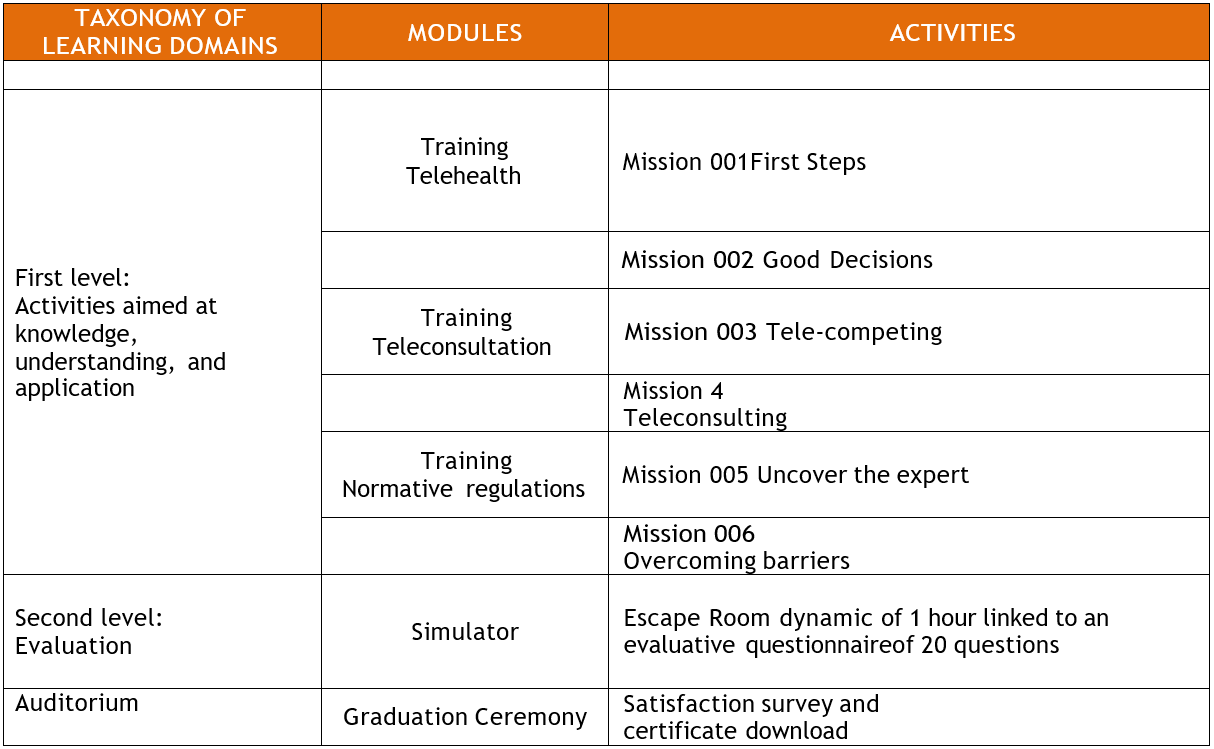
The Telehealth Training Center is made up of 3 trainings (modules), with two missions per training. These trainings are linked to a data center where all the information to be able to solve the missions is found, as well as an overall description of each training and activity.
The above course description is presented in the following table:
Didactic strategies
The main strategies of this training are gamification and simulation.
The activities consist of animated and interactive scenarios that represent real situations which are useful for the promotion of learning and require the participant`s involvement. These scenarios refer to learning elements in different formats which include interactive videos, practical exercises, case studies, and other audiovisual elements such as infographics, posters, images, etc.
Evaluation and certification
Upon completion of all activities in the training center, participants must pass a "final exam" consisting of twenty multiple-choice questions associated with the simulator in level 2.
The final exam is designed to offer participants multiple opportunities to answer correctly until they achieve the required score of at least 70% correct.
Participants who meet these requirements and complete the quality survey of the Virtual Campus for Public Health (VCPH) will be able to download their completion certificate from the training center issued by the Pan American Health Organization.
Gender and health: Awareness, analysis, and action
This "Self-learning Virtual course on Gender and health: awareness, analysis, and action" seeks to provide participants with the knowledge and basic skills for gender mainstreaming in health. The course outlines how gender operates as a determinant of health and guides participants through the basic steps of applying gender-sensitive planning to their work, as well as introducing some basic techniques on integrating a gender perspective in public health practice.
General objectives
- Increase knowledge and awareness of how health outcomes are influenced by sex, gender norms, roles and relations, and other determinants of health.
- Start to develop a set of analytical skills on how to conduct a gender analysis and how such skills might be applied in a public health context.
- Understand how the health sector can use gender analysis tools to effectively reduce health inequities.
Methodology
This is an online course available on the Moodle e-learning platform run by the PAHO/WHO’s Virtual Campus for Public Health (VCPH).
It is a self-learning course which participants can take autonomously at their own pace.
The course includes:
- An introductory module
- Three modules addressing the main themes of gender mainstreaming in health and in public health practice
- All modules consist of audio presentations with supporting materials (such as examples of experiences of countries) and interactive quizzes so that what is learned during the course can be put into practice.
Duration and workload
This is a self-learning course with an estimated total duration of 6 hours. Participants can work at their own pace.
Evaluation
At the end of each module, participants must respond to a series of review questions to be able to progress to the next module.
Once all three modules and their respective review quizzes have been completed, the "Final Exam" covering all course materials can be taken. Participants must answer 70% of the questions correctly to pass this Final Exam.
Certificates
Participants who pass the Final Exam and complete the VCPH Quality Survey can download the certificate of completion issued by the Pan American Health Organization.
The Health Sector Response to Violence Against Women and Girls
Violence against women, including intimate partner violence and sexual violence, is pervasive globally and leads to significant physical and mental health problems. Thus, as a public health crisis it demands a concerted response from health care providers and health systems worldwide.
We seek to provide health care providers with the knowledge and basic skills to implement World Health Organization (WHO) recommendations in their clinical practice while providing survivor-centered care and emphasizing compassionate, empathetic provider-to-survivor communication. Training health care providers is key to improving the health system’s response to violence against women.
Course Purpose
The following course is designed to guide health care workers in caring for women and girls who are survivors of violence, including intimate partner violence and non-partner sexual violence.
Course Objectives
- Introduce learners to intimate partner and sexual violence: including what it entails, its short- and long-term consequences, why it happens, and its prevalence (with an emphasis on cases in the Caribbean).
- Dispel myths surrounding intimate partner violence and sexual violence: including who is affected and what violence looks like, with an emphasis how women and girls, of diverse backgrounds, are all affected and might be targeted on account of their identity/diversity.
- Introduce the role of health care providers in responding to violence by presenting guiding principles on ethical, safe, and survivor-centered responses to intimate partner and sexual violence, centered on their rights.
- Train learners on how to screen for and identify cases of intimate partner and sexual violence, including in “non-traditional” settings and amongst “non-traditional” cases.
- Train learners on first-line support for survivors of intimate partner and sexual violence, with an emphasis on listening, inquiring, and validating their experiences (i.e. “LIV” of the “LIVES” acronym).
- Train learners on the clinical management of rape, including a brief overview of forensic evidence collection, mental health care, and documentation of intimate partner and sexual violence.
- Continue to train learners on first-line support, with an emphasis on enhancing safety and providing support (with examples of referral pathways) (i.e. “ES” of “LIVES” acronym).
- Explore opportunities for learners to build capacity for intimate partner and sexual violence responses in their own clinical setting.
- Train learners on how to train their colleagues on the response to intimate partner and sexual violence and on how to build capacity in their own setting and region, including: on how to use this training (and adapt it) to conduct their own trainings and how to deal with issues that might arise in training or capacity building.
Target Audience
Health care providers, who care for (or might encounter) survivors of intimate partner and sexual violence, including in outpatient/community settings, accident and emergency department, women’s health services, obstetric settings, and pediatric settings. This includes doctors, nurses, midwives, and community health workers, amongst other health care providers.
Course Workload and Dedication
The course is open and available through PAHO’s Virtual Campus (VCPH). The course is designed to be completed at your own pace and to fit into your own Schedule. It should take about 3 hours in total to complete, about 15 to 20 minutes per module will be needed on average, depending on the prior knowledge level of the participant.
We hope that you find this course engaging, and we hope that you explore further resources and the additional reading that is included.
Course Structure
This course is divided into ten modules:
- Module 1: Introduction to Intimate Partner Violence and Sexual Violence
- Module 2: Myth vs. Fact
- Module 3: Guiding Principles for Health Care Providers
- Module 4: Identification of Survivors
- Module 5: First-Line Support (Part 1)
- Module 6: Clinical Management and Documentation
- Module 7: Mental Health First Aid and Self-Care
- Module 8: First-Line Support (Part 2) and Referral Pathways
- Module 9: Setting the Scene
- Module 10: Conclusion
- Optional module: Training of Trainers
Didactic Strategy
This is a self-study, free, open to the public and self-administered course. The modules have various educational materials such as tables and infographics, videos, animations, case studies, questions to consider, further reading, and summaries.
Acknowledgements
This course was developed by the Noncommunicable Diseases and Mental Health Department of the Pan American Health Organization/World Health Organization (PAHO/WHO). We gratefully acknowledge the financial support of the Public Health Agency of Canada and Global Affairs Canada. Additionally, we are extremely grateful to our colleagues at the World Health Organization’s headquarters in Geneva, who created many of the guidance documents that informed this course.
Further, we are very grateful for the health care providers and governmental and non-governmental leaders who participated in the pilot of this course throughout the Caribbean from: Anguilla, the Bahamas, Barbados, Belize, Grenada, Jamaica, Montserrat, Saint Kitts and Nevis, Saint Lucia, Saint Vincent and the Grenadines, Trinidad and Tobago, and Turks and Caicos.
Prevent and Respond to Violence Against Women in the Caribbean
Course Introduction
Violence against women, including intimate partner violence and sexual violence, is pervasive globally and leads to significant physical, sexual, and mental health problems. As a public health crisis, it demands a strong coordinated response from health systems, leaders, and workers worldwide.
Course Purpose
The following course is designed to introduce regional, sub-regional, and national actors to public health mandates, plans, frameworks, and essential services packages and best practices for operationalizing subregional, multisectoral and coordinated public health responses to violence against women and children in the Caribbean. Based on PAHO, UNFPA, and WHO manuals and technical resources, it aims to strengthen the institutional capacity of health leaders, policymakers, and workers in the Caribbean, based on a multisectoral approach.
Course Objectives
- Introduce learners to intimate partner and sexual violence: including what it entails, its short- and long-term consequences, why it happens, and its prevalence (with an emphasis on cases in the Caribbean).
- Introduce learners to models, protocols, standard operating procedures, and essential services packages to ensure access to survivor-centered care, appropriate referral mechanisms and multisectoral coordination, comprehensive regional, sub-regional, and national health governance, and provision of robust evidence to inform policy at the regional, sub-regional, and national level.
- Develop skills for the design, planning and implementation of regional, sub-regional, and national policies, mandates, plans, and service delivery to create and bolster a multisectoral and coordinated response to violence against women and their children, at the regional, sub-regional, and national level.
Target Audience
The course is designed for regional, sub-regional, and national health leaders, policymakers, and workers throughout the Caribbean including those responsible for implementing regional public health policy and mandates and for coordinating a multi-sectoral response to violence against women and children. This includes representatives from health sector as well as their colleagues from other sectors and institutions in the Caribbean, including regional representatives of CARICOM (including PANCAP), CARPHA, OECS, and other regional bodies engaged in health policy and programming, in addition to representatives from the government and civil society organizations.
Course Workload and Dedication
The course is open and available through PAHO’s Virtual Campus (VCPH). The course is designed to be completed at your own pace and to fit into your own schedule. It should take about 8 hours in total to complete, depending on the prior knowledge level of the participant.
We hope that you find this course engaging, and we hope that you explore further resources and the additional reading that is included.
Didactic Strategy
This is a self-study, free, open to the public and self-administered course. The modules have various educational materials such as: tables and infographics, videos, animations, case studies, questions to consider, further reading, and summaries.
Course Structure
This course is divided into three units:
UNIT A
- Module 1 - From Silence to Awareness: Definitions and Statistics of Violence Against Women and their Children
- Module 2 - Under the Microscope: Violence as a Multidimensional Phenomenon
- Module 3 - Shaping a Safer Future: Mandates and Plans to Prevent and Respond to Violence
- Module 4 - Connected Voices and Collective Impact: Taking a Holistic Approach to Eradicating Violence
UNIT B
- Module 1 - Leading the Way: Empowering Regional and Sub-Regional Actors and Member States
- Module 2 - Empowering Change: Strategies and Steps for Building a Response to Violence Against Women and Girls
- Module 3 - Unveiling the Truth: The Impact of Research on Eradicating Violence Against Women
UNIT C
- Module 1 - From Pain to Progress: Prioritizing Clinical Care for Survivors of Violence
- Module 2 - Unlocking Synergy: The Potential of Multisectoral Coordination and Referral Pathways
- Module 3 - Putting Her First: Survivor-Centered Clinical Tools and Evaluation
- Module 4 - Healing Hands: Elevating Health Workers’ Capacity
Acknowledgments
This course was developed by the Noncommunicable Diseases and Mental Health Department of the Pan American Health Organization/World Health Organization Regional Office for the Americas (PAHO/WHO) in partnership with the United Nations Population Fund’s (UNFPA) Sub-Regional Office for the Caribbean. We gratefully acknowledge the financial support of the European Union-funded Spotlight Initiative and of the Government of Germany for making this course possible.
Introduction to Epidemiology for Health Systems in the Americas
Introduction
Public health is the science of protecting and improving the health of people and their communities. While medicine works to treat the sick, public health focuses on prevention and improving quality of life. The work of public health is achieved by promoting healthy lifestyles, researching disease and injury prevention, as well as detecting, preventing and responding to health outcomes. One way this is achieved is through epidemiology. Epidemiology is the study of the distribution (frequency, pattern) and determinants (causes, risk factors) of health-related states and events (not just diseases) in specified populations (neighborhood, school, city, state, country, global).
In response to different mandates of the Organization related to the generation of evidence and intelligence for health, the course "Introduction to Epidemiology for Health Systems in the Americas” provides the necessary elements to develop the basic skills, fundamental to epidemiology as a basis for the development of analytical skills and problem solving in epidemiological practice. The contents facilitate the fulfillment of two new essential functions in public health: (1) "The monitoring and evaluation of health and well-being, equity, the social determinants of health and the performance and impact of health systems", and (2) “Surveillance in public health: control and management of health risks and emergencies”. Among those mandates is worth to mention: PAHO Disease Elimination Initiative: Policy for Applying an Integrated and Sustainable Approach to Communicable Diseases in the Region of the Americas (Document CD57/7); International Health Regulations; Plan of Action for the Prevention and Control of Noncommunicable Diseases (Document CD52/7, Rev.1); Plan of Action for Strengthening Vital Statistics 2017-2022: Midterm Review, CD58/INF/14; Plan of Action on Human Resources for Universal Access to Health and Universal Health Coverage 2018-2023 (Document CD56/10, Rev. 1).
Course Purpose
This course introduces the participant to basic public health and epidemiology concepts. Including basic definitions, calculations, understanding concepts and how to apply them, as well as the importance of collaboration and partnerships.
Learning Competencies
Course participants will have opportunities to develop competencies related to evidence-informed practice and communication, such as:
- Applies the principles of evidence-informed practice
- Assesses data and information from a range of sources
- Manages information sharing and documentation
Learning Objectives
Throughout the course, it is expected to contribute so that the participants achieve:
- A better knowledge on how the conditions in the environments where people are born, live, learn, work, play, worship, and age affect health, functioning, and quality-of-life outcomes and risks.
- An understanding of how public health activities are aimed at protecting and improving the health of people and their communities.
- A better knowledge of the key role of epidemiology supporting public health activities to assess the magnitude and distribution of health-related states and events (not just diseases) in specified populations.
Target Audience
This first introductory level course is directed towards the general public with an interest in public health and epidemiology, as well as those persons working in public health departments, particularly at entry level public health or epidemiology roles, as decision-makers in charge of developing policies, planning programs and implementing them in public health departments and health service organizations with little to no formal training in epidemiology or public health.
Course Structure
Module 1: Introduction to Epidemiology and Public health
Module 2: The Foundation of Public Health and Epidemiology: Diversity, Health Equity, Social Mobilization, Collaboration, and Communication
Module 3: Practical Applications of Epidemiology
Module 4: Descriptive Epidemiology: Person, Place, Time
Module 5: Association and Causality
Didactic Strategy
This is a self-study, free, open to the public and self-administered course. The course is done online, on the Virtual Campus for Public Health (VCPH).
Assessment and certification
Participants who meet the course approval requirements - complete all five modules and pass the evaluation questionnaire final- and answer the quality survey of the VCPH will be able to download their certificate of approval, issued by the Pan American Organization of Health (PAHO).
Course Workload and Time Commitment
The course is open and available on the Virtual Campus for Public Health (VCPH) of PAHO. As a self-paced course, participants can choose the modules and lessons at their own rhythm. This course consists of five modules. The estimated time to complete the five modules, supplementary materials, and associated evaluation activities is 40 hours.
Acknowledgments
This course is being carried out within the framework of a work agreement with the Association of Schools and Programs of Public Health (ASPPH).
Introductory virtual course Systematics Reviews of the literature
Course Program
Introduction to the course
The use of scientific evidence is a key factor in the planning, formulation, implementation, monitoring, and evaluation of health policies and programs. The pandemic caused by SARS-COV-2 highlighted the need to strengthen capacities in the development and interpretation of evidence for health decision-making. Informing these decisions with scientific evidence can improve health systems and service outcomes.
Systematic reviews play an important role in evidence-informed decision-making. They areat the core of all evidence-based products, including guidelines (e.g., GRADE guidelines), health technology assessment (HTA) reports, coverage decisions, and evidence syntheses for policymaking.
This course was developed by the Pan American Health Organization (PAHO) to support the capacity building to strengthen evidence-informed decision-making in the Region.
Course objective
- This course describes the most important concepts involved in conducting a systematic review to answer questions on interventions. .
- Students will be able to apply knowledge about the process and concepts presented, in order to produce a critical analysis of systematic reviews and plan their own systematic review.
Target audiences
- Health professionals interested in using and conducting systematic reviews, agency staff who use systematic reviews to inform their decisions, students in professions related to health care or epidemiology.
- Decision makers and managers at different levels involved in decisions about health policies and programs and their drivers, in both national and local governments; researchers, postgraduate students, and members of civil society organizations interested in the subject.
Competency profile
Course participants will develop introductory skills in:
- Tools and resources that support the use of scientific evidence in decision-making on health policies and health systems.
- Acquisition, evaluation, adequacy, and application of systematic reviews in health decision-making.
- Planning, preparation, and use of systematic reviews to inform discussions on priority public health issues.
Learning approach
The course is structured on remote self-learning. It is based on active methodologies and prioritizes practices aimed at competency building. The contents and working methods are adapted from the Cochrane Handbook for Systematic Reviews of Interventions and other current resources.
Module structure
- Introductory videos on each topic, describing key concepts.
- Supporting texts: further reading (in English and Spanish) to delve into the contents and tools available.
- Exercises aimed at applying what is learned.
Course format
Self-learning course, free, open to the public, and with no time limits for completion.
Course duration
20 hours.
The course is open access. Since it is a self-study course, participants can set their own schedule.
Course structure
Contents:
Module 1: Types of evidence synthesis and introduction to systematic reviews
Module 2: Formulation of PICO questions and selection criteria
Module 3: Search for and selection of articles
Module 4: Data extraction
Module 5: Assessment of risk of bias
Module 6: Synthesis of results: meta-analysis and other analyses
Module 7: Subgroup and sensitivity analysis
Module 8: Assessing the certainty of the evidence
Module 9: Summary tables of findings
Module 10: Interpreting results and formulating conclusions
Evaluation and certification
At the end of the virtual course, participants will have to pass a final exam consisting of 20 multiple-choice questions that assess their knowledge, attitudes, and skills.
The final exam offers participants multiple opportunities to answer correctly until they obtain the necessary score of at least 70%.
Participants who meet the previous requirements and complete the Virtual Campus on Public Health (VCPH) quality survey can download their course completion certificate issued by the Pan American Health Organization.
Introductory Online Course on Developing and Adapting Guidelines Using the GRADE Methodology
Introducción
Una función central de la Organización Panamericana de la Salud (OPS) es fortalecer la capacidad y los estándares de los recursos humanos cuando se desarrollan e implementan documentos técnicos que contienen recomendaciones de salud basadas en evidencia y opciones de políticas. Para lograr esto, los actores involucrados en el desarrollo, adaptación e implementación de guías bajo el enfoque GRADE deben recibir capacitación de acuerdo con los estándares recomendados por la Organización Mundial de la Salud (OMS) y la OPS.
Perfil del participante
Cualquier persona interesada en cómo se desarrollan e implementan las recomendaciones basadas en evidencia es bienvenida a tomar este curso. Es preferible el conocimiento básico del desarrollo de una revisión sistemática y una evaluación crítica de los estudios de investigación.
Duración
Este curso de aprendizaje en línea se dividirá en 13 unidades sobre diferentes temas. El curso completo tardará aproximadamente 20-25 horas en completarse.
Objetivos específicos
· Fortalecer la capacidad para implementar los procesos recomendados por la OPS/OMS para el desarrollo de guías y documentos basados en evidencia
· Mejorar las habilidades de búsqueda de los profesionales de la salud y su capacidad para hacer uso de las guías
· Mejorar los conocimientos y habilidades en la valoración crítica de las guías
· Mejorar el conocimiento y las habilidades en el desarrollo y adaptación de guías basadas en evidencia usando el enfoque GRADE
· Familiarizarse con los aspectos relacionados con la implementación de las guías de salud
· Mejorar los conocimientos y habilidades en el uso de guías para la toma de decisiones
Contenido
Unit 1: Introduction to evidence-informed health guidelines
Unit 2: Planning and scoping of guidelines
Unit 3: Guideline development group composition and conflicts of interest
Unit 4: Formulating questions and selecting outcomes
Unit 5: Clinical trials and systematic reviews as the basis for health guidelines
Unit 6: Evidence searching, assessment and synthesis I
Unit 7: Evidence searching, assessment and synthesis II
Unit 8: Evidence searching, assessment and synthesis III
Unit 9: Evaluation of resources and costs
Unit 10: Integrating patient values and preferences
Unit 11: Formulation and implementation of recommendations
Unit 12: Reporting, updating, and external review
Unit 13: Implementation and evaluation
Risk Communication and community engagement in response to dengue outbreaks
Introduction
In December 2023, the World Health Organization (WHO) classified the global upsurge of dengue as a grade 3 emergency, the highest level of emergency for WHO, to help countries strengthen their surveillance capacity and response activities for dengue outbreaks and epidemics.
For the Americas region, 2024 has become a record year for dengue cases. According to the Pan American Health Organization (PAHO), as of epidemiological week (EW) 44 of 2024, 12,479,437 suspected cases of dengue had been reported (for a cumulative incidence of 1,307 cases per 100,000 population). This figure represents an increase of 204% compared to the same period in 2023, and 381% compared to the average of the last 5 years.
These data show that the incidence of dengue has been increasing dramatically in the last 30 years, where nearly 500 million people in the Americas are at risk of contracting this disease, taking into account that the 4 dengue serotypes (DENV-1, DENV-2, DENV-3 and DENV-4) circulate in this region.
Given this epidemiological situation in the region, PAHO has redoubled its efforts to strengthen technical cooperation for Ministries of Health in the Americas.
Elimination of mosquito breeding sites and detection of warning signs of dengue are the most important strategies for its prevention and control. PAHO, in collaboration with allied partners, donors, and other key actors, has deployed strategic measures to reduce the impact of dengue, including risk communication and community engagement (RCCE).
Informed, engaged, and empowered communities are the basis for success in preparing for and responding to dengue outbreaks and health emergencies; therefore, preparedness and response plans should include intersectoral actions for community participation and mobilization to modify and sustain vector control practices and other self-care measures for dengue emergencies.
The development of this course is based on the document "Risk communication and community engagement readiness and response toolkit: dengue fever” developed by the World Health Organization (WHO).
Purpose
To strengthen the strategic planning and response of Risk Communication and Community Engagement (RCCE) for dengue fever health emergencies among communication, health promotion, social and community mobilization teams, as well as other technical areas within health authorities and sector entities involved in dengue response.
Competencies
Participants of the course will develop introductory competencies about how to plan, implement, and evaluate Risk Communication and Community Engagement (RCCE) strategies in response to dengue outbreak emergencies, using an evidence-based, inclusive, trust-centered, and socially mobilized approach, in order to strengthen community preparedness, response, and disease control.
Learning objectives
- Understand the strategic role of Risk Communication and Community Engagement (RCCE) and its importance in responding to dengue health emergencies.
- Identify key components of RCCE during dengue outbreaks to design effective strategies that prevent transmission and reduce mortality.
- Recognize inclusive, trust-based, evidence-driven, and collaborative approaches to address public uncertainty during dengue outbreak emergencies.
- Analyze tools for collecting social behavior and community knowledge data to inform the design and implementation of RCCE strategies and plans.
- Evaluate tools for developing RCCE strategies and plans that support decision-making among health authorities and partner institutions involved in emergency preparedness and response.
Participant profile
This course is intended for national and local health authority personnel; decision-makers and policy-makers; professionals in risk communication, health promotion, and community engagement; emergency management authorities; representatives of international organizations, non-governmental and civil society organizations; municipal officials; community leaders; volunteers; and other interested stakeholders.
Duration
Approximately 3 hours are required to complete the course.
Course modality
Self-learning course, free of charge, open to the public and without deadlines to complete it. The course is open and available in the VCPH. As it is a self-paced course, participants can choose when they are able to progress through the course. Therefore, by including the estimated time to complete the “Initial quiz”, the course lessons, the self-assessments, and the “Final Quiz”, the course is assigned a total of 3 hours.
Course structure
The course is developed through the approach of five lessons (identified in the course as “Stops”):
- Academic route
- Introduction
- Background and aspects related to the dengue virus
- Toolbox for dengue outbreaks
- Additional Risk Communication and Community Engagement (RCCE) resources in response to dengue outbreaks
Academic route
Throughout the course you will have the following activities, which should be carried out in the following order:
- Initial quiz: does not count towards the final grade of the course, its purpose is to measure your initial knowledge of the topic. It is designed to allow you to answer one-time initial questions about basic knowledge of RCCE. Once you answer it, you will be able to start with the Introduction lesson.
- Review the content of each Stop (lesson) and complete the self-assessment questionnaires for Stops 2, 3 and 4. Upon completion of Stop 2, you will be given access to Stop 3, and so on until you complete the course. These assessments are designed to allow you multiple opportunities to answer correctly until you obtain at least 70% (minimum passing score).
- Final Quiz: Upon completion of the 5 stops, you will be asked to answer a "Final Quiz". You are allowed to answer it one time. The Final Quiz does not count toward the final course grade.
Evaluation and certification
To obtain the course completion certificate, participants must meet the following requirements:
- Complete the learning path by reviewing each of the lessons.
- Complete both the Initial quiz and the Final Quiz.
- Achieve a score of at least 70% on each of the lesson self-assessments.
- Complete the Virtual Campus for Public Health (VCPH) Quality Survey.
Participants who meet these requirements will be able to download their course completion certificate, issued by the Pan American Health Organization.
Course in Water supply in Emergency Medical Team deployments
Introduction to Water Supply in EMT Deployments
This course is part of the WASH capacity-building process for Emergency Medical Teams (EMTs) in the Americas region. It accompanies the EMT Ignite webinars held during the response to the COVID-19 pandemic, as well as the donations of water treatment kits, based on the same process explained in this course. These kits have been provided to national EMTs in the region to strengthen local and regional health response mechanisms through improved self-sufficiency.
Course Program
Introduction to the Course
Emergency Medical Teams (EMTs) are groups of health professionals comprising doctors, nurses, first aid technicians, and logistics experts, among others, who provide clinical care to people affected by an emergency. They come from governments, charities, non-governmental organizations (NGOs), the military, civil protection bodies, international humanitarian networks (including the International Red Cross and Red Crescent Movement), Médecins Sans Frontières (MSF), teams contracted by the United Nations, and the private for-profit sector. They work to minimum standards agreed upon by the EMT community and its partners and are deployed with the necessary training and self-sufficiency so as not to overburden an already stressed national system.
As part of self-sufficiency, the capacity to supply water during the days that the EMTs are deployed must be demonstrated. Therefore, they must have the necessary equipment and consumables, as well as the technical know-how to effectively carry out the supply process, from water collection to consumption, including transportation, storage, treatment, and disinfection.
This introductory course on water supply in EMT deployments aims to provide people involved in the deployment and operation of this equipment with the tools and knowledge necessary to be prepared and respond quickly and timely to emergencies, disasters, and pandemics, reaching the minimum technical standards recommended by WHO/PAHO. The course covers the following areas related to water supply: catchment, transport, storage, pretreatment, filtration, residual disinfection, distribution, and water analysis.
Purpose
The purpose of this course is to provide basic theoretical knowledge that will allow for the proper implementation of a water supply system in an Emergency Medical Team and improve its self-sufficiency and safety during its deployment.
Objectives
At the end of the course, participants will be able to:
- Understand what is involved in having a water supply system in an EMT.
- Understand how to make a correct selection of the capture point in a deployment.
- Decide how to transport water during an emergency response.
- Calculate the number and type of tanks and how to store water in an EMT.
- Define the previous procedures necessary to adapt the water to the filtration process.
- Select the desired filtration equipment in an EMT system for water supply.
- Have the basic knowledge to carry out residual chlorination in water.
- Design and obtain a water distribution system in an EMT.
- Acquire and use the necessary equipment for water analysis in an EMT.
Target Audience
This introductory course on water supply in an EMT is intended for all related Emergency Medical Team operational personnel involved and/or interested in the design, equipment procurement, and operation of the potable water supply process during an emergency, disaster, and pandemic response deployment.
Course Duration
Two hours.
Course Modality
Self-paced (self-learning) course, free of charge, open to the public, and with no deadlines for completion.
Course Structure
Session 0: Introduction to the Course
- Animation 1: Theory
- Audiovisual 1: Visual example
- Confirmation of Knowledge 1 (5-question test, 10 minutes)
Session 1: Recruitment
- Animation 1: Theory
- Audiovisual 1: Visual example
- Confirmation of Knowledge 1 (5-question test, 10 minutes)
Session 2: Transportation
- Animation 2: Theory
- Audiovisual 2: Visual example
- Confirmation of Knowledge 2 (5-question test, 10 minutes)
Session 3: Storage
- Animation 3: Theory
- Audiovisual 3: Visual example
- Confirmation of Knowledge 3 (5-question test, 10 minutes)
Session 4: Pretreatments
- Animation 4: Theory
- Audiovisual 4: Visual example
- Confirmation of Knowledge 4 (5-question test, 10 minutes)
Session 5: Filtration
- Animation 5: Theory
- Audiovisual 5: Visual example
- Confirmation of Knowledge 5 (5-question test, 10 minutes)
Session 6: Residual Chlorination
- Animation 6: Theory
- Audiovisual 6: Visual example
- Confirmation of Knowledge 6 (5-question test, 10 minutes)
Session 7: Distribution
- Animation 7: Theory
- Audiovisual 7: Visual example
- Confirmation of Knowledge 7 (5-question test, 10 minutes)
Session 8: Water Analysis
- Animation 8: Theory
- Audiovisual 8: Visual example
- Confirmation of Knowledge 8 (5-question test, 10 minutes)
Evaluation and Certification
After each session, participants are required to take a short assessment that allows them to reinforce the knowledge acquired. The evaluation offers the participants multiple opportunities to answer correctly until they obtain the required score of at least 70%. Participants who meet this requirement in all knowledge confirmation evaluations and complete the Quality Survey of the Virtual Campus for Public Health (VCPH) will be able to download their certificate of course completion issued by the Pan American Health Organization.
References
A document of bibliographical references used for the development of the course content can be found on the course platform.
Acknowledgments
The content of the Spanish edition of this course was developed in collaboration with the EMT teams of Costa Rica, Panama, and Mexico, in addition to the support of experts from the PAHO Regional EMT Secretariat.
Basic Course for Planning and Managing Medical Oxygen
This course will be taught remotely on the Virtual Campus as a technical and administrative resource to improve the planning and management of medical oxygen and to strengthen the rational, sustainable and safe use of medical oxygen, thus supporting the countries in the Americas in the current response to the COVID-19 pandemic and in the daily operation of hospitals.
Course introduction
Oxygen is included in the World Health Organization's list of essential medicines and is used to care for patients at all levels of integrated health service networks.
Because oxygen use efficacy is already proven in the treatment of patients with respiratory conditions caused by COVID-19, there is a great opportunity to improve its effectiveness if its use is promoted in a rational, sustainable and safe way.
It is important for health service network professionals to have access to specific knowledge that enables a more professional management in rational oxygen use. This will make it possible to rationalize its consumption and prevent the efficiency loss of this gas during its storage, distribution and administration. These insights will also strengthen proper technical support for all oxygen production systems. They will also help reduce waste that may be produced by leaks in the storage system or distribution network, by use of gas at an incorrect pressure or by flow meters with incorrect adjustments, among other causes.
This course seeks to convey basic informative and educational content on medical oxygen. The content includes all the stages in oxygen management: from manufacturing, storage, distribution and controls to dispensing to patients.
Thus, this course has eight (8) sessions which are:
- What is medical oxygen?
- Safe oxygen supply matrix
- Oxygen consumption and reserve planning
- Hazardous oxygen sources
- Oxygen acquisition
- Financial analysis and purchase options
- Safety during clinical applications
Goal
That participants acquire theoretical knowledge on how to plan and manage oxygen, promoting its use in a rational, sustainable and safe way in health care establishments (hospitals, clinics, home use, etc.)
Objectives
Upon completion of the course, participants will be able to:
- Know the kinds of medical oxygen, how they are produced and made available for health establishments and home care.
- Know how to generate a supply matrix to increase supply safety.
- Know how to estimate oxygen consumption for strategic clinical, administrative and technological planning.
- Identify main risk sources and action mechanisms when transporting, storing and distributing oxygen.
- Specify cylinders and therapy devices for oxygen use.
- Financially analyze purchase or production options.
- Safety of oxygen use in clinical applications.
Target Audience
This course is intended for all staff related or involved with acquiring, distributing, purchasing and using medical oxygen, with greater emphasis on those in charge of managing, purchasing and maintaining oxygen sources, cylinders and accessories related to medical oxygen use.
Course Length
Two hours.
Course modality
Self-learning, free, open-to-public and open-term course.
Evaluation and certification
Participants take a small test after each session that allows them to strengthen acquired knowledge.
Participants who meet the requirements described and complete the quality survey of the Virtual Campus for Public Health (VCPH) at the end of the 8-session virtual course can download their course passing certificate issued by the Pan American Health Organization.
References:
- Technical Group on Oxygen: Best practices in rational and effective oxygen use: https://iris.paho.org/items/32098278-f5eb-4e3b-a9c4-dd35cf912556
- Graphic information – Sustainable oxygen use in 10 videos (in Spanish): https://www.paho.org/es/documentos/infografia-uso-sostenible-oxigeno-10-videos
- Recommendations to adopt and acquire oxygen generating plants by pressure swing adsorption: https://iris.paho.org/items/08db3906-fc95-4588-8cc2-548f0b0fe721
Health and Migration: Regional strategic lines of action on health and migration
The course is designed to guide public authorities within the health sector, and beyond, on developing inclusive and evidence-based policies, strategies, and programs on health and migration, aimed at improving the health of migrants in countries throughout the Region of the Americas.
Purpose
By the end of the course, participants will be able to identify priority migrants’ health needs and apply their knowledge to advocate for people-centered interventions using global and regional frameworks, and other key instruments.
Learning outcomes
The course offers elements for the development of skills related to:
- Define and apply key concepts and principals on health and migration, as well as relevant international and regional policies and frameworks.
- Identify migrants’ health needs, risks, and diverse experiences across the life course, gaps in health systems and services that impact both the migrant and host communities, as well as the social and environmental determinants that impact health and well-being.
- Enhance critical analysis and strategic planning skills for responsive and migrant-sensitive policymaking, that takes into account cross-cutting themes such as data collection, gender, ethnicity, and human rights.
-
Analyze strategies, measures, and interventions to promote the following PAHO Strategic Lines of Action:
- strengthen health surveillance, information management, and monitoring,
- improve access to health services for the migrant population,
- improve communication and information exchange to counter xenophobia, stigma, and discrimination,
- strengthen alliances, networks, and multi-country frameworks,
- adapt policies, programs, and legal frameworks to protect and promote the health and well-being of the migrant population.
Participants profile
Anyone interested in the subject, public health professionals and public authorities.
Duration
10 hours
Methodology
This course has a self-management methodology, you can do it at your own pace. The exercises are self-reflective and will help you self-regulate your own learning and identify elements or units you need to review again.
The course consists of audio presentations and automated quizzes to apply the learning acquired.
Course Structure
Module 0: Course Introduction
Module 1: Introduction to concepts, migration dynamics, and international and regional frameworks
Module 2: Access to health services for the migrant population
Module 3: Health surveillance, information management, and monitoring
Module 4: Multi-country alliances, networks, and frameworks in health and migration